





HRT and hormone treatments for women, backed by bloodwork.
Stop negotiating with symptoms you've been told to wait out. Specialist-led care, built on a full female hormone panel.
Start my assessment
Matched to your panel, not a symptom checklist

Hormone Patch
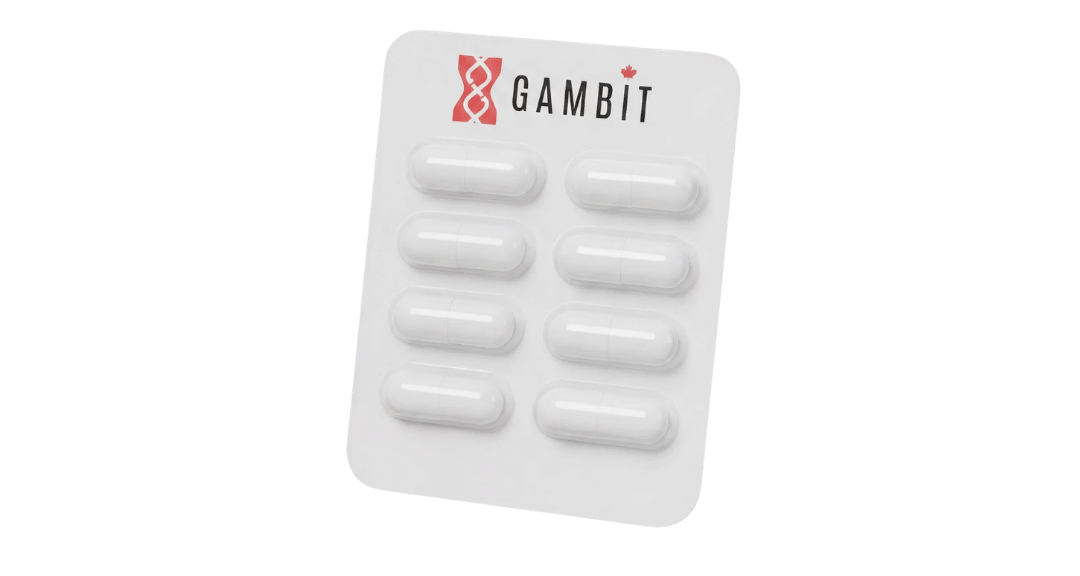
Oral Capsule

Topical Cream
Step one
Find out what your hormones are actually doing.
A specialist-reviewed female hormone panel that answers the question others keep deferring: are your symptoms hormonal, and is treatment a fit for you?

Eligibility Assessment
Best for: Women whose symptoms have been brushed off as stress, age, or "normal" — and who want a panel, not a guess.
- A female-specific panel covering estrogen, progestogen, androgen, thyroid, or metabolic markers — drawn at a certified lab near you.
- Results reviewed by Dr. Hatem S. Salim, an internal medicine specialist — not a GP, not a call-centre nurse, not another shrug.
- A clear next step within 48 hours: comprehensive bloodwork or an honest "this isn't the fit."
$50
Less than dinner out for a specialist-grade answer.
Required before therapy
See what's really driving your symptoms.
A specialist-led review of your estrogen, progestogen, androgen, thyroid, and metabolic markers — read together as one system. Required before any HRT prescription is written.

Comprehensive Female Panel
Best for: Women who already suspect their symptoms are hormonal — and want the full panel read together before starting therapy.
- A multi-system panel covering estrogen, progestogen, androgen, thyroid, fertility/pituitary, and metabolic markers — drawn at any lab near you.
- Every result interpreted by Dr. Hatem S. Salim, our internal medicine specialist — not an algorithm, not a triage nurse. You get a written read-back of your full picture, in plain language.
- Required before any prescription. Rules out contraindications, surfaces concurrent conditions a basic screen would miss, and lets your Gambit specialist build a protocol on complete data — not assumptions.
Contact us for a personalized quote
Not a candidate for HRT after specialist review? We refund 95% — you keep the full workup, your written results, and the personalized insights to take anywhere.
It’s easy to get started.
 01
01
Complete your evaluation
Tell us about your goals, health, and history. We’ll match you to a program.
 02
02
Get your comprehensive bloodwork
Your panel covers 50+ biomarkers at any lab near you. 95% refundable if we can’t approve you for treatment. Or start with simple bloodwork to test eligibility.
 03
03
Get your prescription
Our specialist reviews your labs and finalizes any treatments if deemed medically appropriate. Medication ships from a licensed Canadian pharmacy. Access our health team 7-days a week.
 04
04
Optimize your results
Track your progress while our specialist tunes your dose with bloodwork and repeat check-ins over months to ensure full symptom management.
72% of Canadian women say menopause symptoms have impacted their work life.
Most don’t know symptoms can begin nearly a decade before menopause. Move the slider to see your projected window.
Your age
45
Years to median menopause age
6yrs
You're inside the perimenopause window. Symptoms can begin years before periods stop, and a panel reads what cycle tracking and a symptom checklist cannot.
Educational projection only — not a clinical diagnosis. Symptom timing varies by individual. Source: Menopause Foundation of Canada, 2022.
What estrogen protects, you can’t feel.
-
 Start my assessment
Estrogen decline accelerates
Bone density loss
Bone-density loss accelerates in the first years after menopause. A hormone panel surfaces it long before fracture risk does.
-
 Start my assessment
Postmenopause is associated with
Cardiovascular risk
The menopause transition is a clinical inflection point for cardiovascular markers, which is why a specialist tracks them alongside hormones.
-
 Start my assessment
Estrogen decline is linked to
Cognitive change
Memory and processing-speed shifts are common in perimenopause. The panel helps a specialist separate hormonal contributors from everything else.

The Executive Ceiling is Biological.
Introducing Gambit Gold — Canada’s most advanced executive health program. It gives you direct, one-on-one video meetings with Dr. Hatem Salim — Gambit’s medical director and Associate Professor of Medicine at Western University — on demand. He walks you through your file and explains exactly what every marker means, and what to do next.
A yearly physical sees a snapshot. Gold builds a record.
What is HRT, and how is it different from "bioidentical hormones" or "natural" alternatives?
HRT (hormone replacement therapy) replaces the estrogen, progestogen, and sometimes testosterone your body stops producing during the menopause transition. The terms get blurred in the market, so here’s how we use them.
Bioidentical means molecularly identical to the hormones your body makes. Bioidentical progestogen and transdermal estrogen are both prescription, pharmacy-dispensed, and what our specialist prescribes here.
“Natural” alternatives usually means OTC creams, blends without quality oversight, or supplements marketed as hormonal support. They’re not regulated as drugs, the doses aren’t verified, and they don’t replace what’s actually missing.
Gambit prescribes Health Canada authorized bioidentical formulations, dispensed by licensed pharmacies, dosed against your bloodwork.
Who is HRT for? Who is it not for?
HRT is for women in perimenopause or menopause whose symptoms — hot flashes, night sweats, sleep disruption, brain fog, mood shifts, low libido, vaginal dryness, joint pain — are affecting how they live, and whose bloodwork supports a hormonal cause.
It’s generally not appropriate for women with a personal history of estrogen-sensitive cancer, active or prior blood clots, undiagnosed vaginal bleeding, severe liver disease, or who are pregnant or trying to conceive. Family history of breast cancer, cardiovascular disease, or migraines doesn’t automatically rule you out — it’s something the specialist factors into the protocol.
Your full medical history is reviewed before anything is prescribed.
Do I have to be in menopause to qualify?
No. Perimenopause counts. Symptoms often start in the early-to-mid 40s, sometimes earlier, before menstruation stops. If your bloodwork and symptoms point to declining ovarian hormone production, you qualify for evaluation regardless of whether your cycles have ended.
Current clinical guidance is also clear that hormone therapy is broadly favourable when started within roughly 10 years of the menopause transition. Earlier is generally better, not worse.
What does the bloodwork panel actually measure?
The eligibility panel checks a few key hormone markers to confirm whether your levels are low enough to qualify for treatment.
The comprehensive panel adds a multi-system view — estrogen markers, progestogen markers, androgen markers (including SHBG and free + total testosterone), adrenal markers, thyroid markers, fasting metabolic markers, lipids, liver enzymes, and inflammatory markers.
You see your numbers against age-appropriate female reference ranges. Our specialist uses them to decide whether HRT is indicated, what protocol fits, and how to monitor it.
Is HRT safe? What about the breast cancer studies I've read?
This is the question every informed woman asks, and it deserves a careful answer.
The early-2000s combined-HRT studies that drove most of the breast-cancer fear used synthetic progestin formulations — a class of lab-made hormones not chemically identical to what the body produces. Subsequent research has shown that bioidentical progestogen formulations have a different, more favourable risk profile in this area. The route matters too: transdermal estrogen carries a different cardiovascular and clotting profile than oral estrogen and is generally the safer route for most patients.
Modern HRT, when prescribed against bloodwork and matched to personal and family history, looks very different from the regimens those headlines were built on. The specialist evaluates breast cancer history, family history, BRCA status if relevant, and recent screening before prescribing — and continues monitoring through bloodwork while you’re on therapy.
What HRT will not do is guarantee an outcome. What it will do is give you a clinically defensible decision based on your data, not a generic guideline written for someone else.
How quickly will I feel different?
Vasomotor symptoms — hot flashes and night sweats — are frequently among the first things women notice shifting, sometimes within the early weeks of a protocol. Sleep, mood, energy, cognitive clarity, and libido tend to follow over a longer adjustment period — individual timelines vary.
Bone-density and other long-term markers play out over months to years and are tracked through repeat bloodwork.
If you’re not seeing meaningful change at the expected window, our specialist reviews and adjusts the protocol — dose, route, and combination can all be tuned.
Will HRT make me gain or lose weight?
HRT is not a weight-loss therapy and is not prescribed for weight management. The honest answer is that most women on appropriate HRT see weight stay roughly stable.
What often shifts is the surrounding picture: better sleep, steadier mood, more energy, fewer cravings driven by hormonal swings. Those changes can make the lifestyle work that supports weight more sustainable. The hormone itself is doing the symptom work, not the scale work.
Do I need to come off HRT eventually?
There’s no fixed end date for most patients. Modern guidance has moved away from hard time limits and toward periodic re-evaluation with the specialist.
Some women stay on HRT long-term because the benefits — symptom control, bone protection, quality of life — continue to outweigh the considerations. Others taper after symptoms resolve. Dose and route are also adjusted over time as your hormonal landscape shifts.
The decision is shared, ongoing, and based on your bloodwork, your symptoms, and your goals — not a calendar.
What if my GP tells me I don't need this?
Hormone therapy is a specialist area. Most family doctors do excellent generalist care, but menopausal hormone management — bloodwork interpretation, formulation choice, route selection, ongoing titration — sits outside the scope of routine general practice. Many GPs refer these conversations onward for that reason.
Gambit’s specialist consultation is designed to complement your GP relationship, not replace it. We run the full panel, review symptoms and history together, and build a protocol you and your GP can both see. If your symptoms are real and a panel supports it, you have a defensible path forward — with documentation that travels back to your primary care record if you want it to.
Still have questions? Book a call with our health team